The fourth International Punjabi Conference is easy to describe in numbers: 69 sessions, 95 speakers, eight tracks, three days at PILAC in Lahore from 27 to 29 November 2026. The numbers explain why the event keeps growing. They do not explain what it is for. Read the programme carefully and a set of arguments appears — about whether Punjabi is a language schools teach or a language students use, about who gets to speak for it, about a cultural economy that cannot keep its young people at home, and about what a digital Punjabi should look like. This preview works through the tracks to show where those arguments will be made.
A conference that has become a fixture
Four editions in four years is unusual for a cultural conference anywhere, and it says something about the organisational model behind this one. Punjabi Parchar and Punjabi Lehar have held the conference annually since 2023, with PILAC as venue partner each time, and have kept the same chair and host: Ahmad Raza Punjabi, with Nasir Dhillon as second host. Free entry, advance registration and a published schedule have stayed constant while the programme has expanded.
That continuity is the conference’s real asset. A one-off event can assemble an impressive list of names; a series can build an audience that returns, a press corps that knows where to find the story, and a set of institutions — universities, media houses, theatre groups, publishers — that plan their year around it. The fourth edition is the first that reads like an established institution rather than an experiment.
What the first three editions built
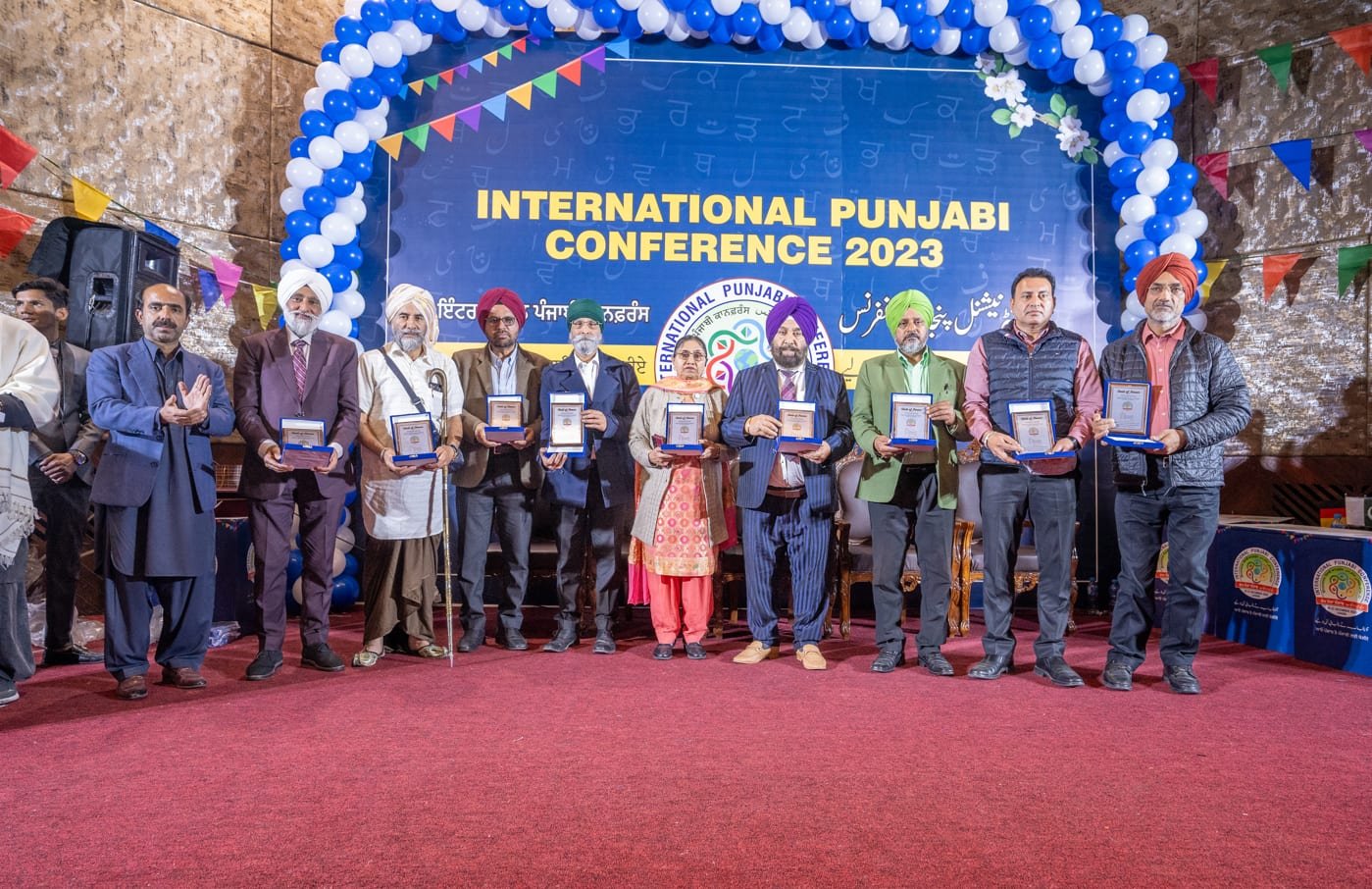
The first conference in 2023 set the pattern its successors followed: a formal opening, panels across literature and politics, research papers, and an evening of performance. The second edition in 2024 adopted the motto “Reviving Punjabi Culture, Strengthening Global Connections” and focused on the evolving role of the Punjabi diaspora, the preservation of heritage, and the use of emerging technology to promote the language.
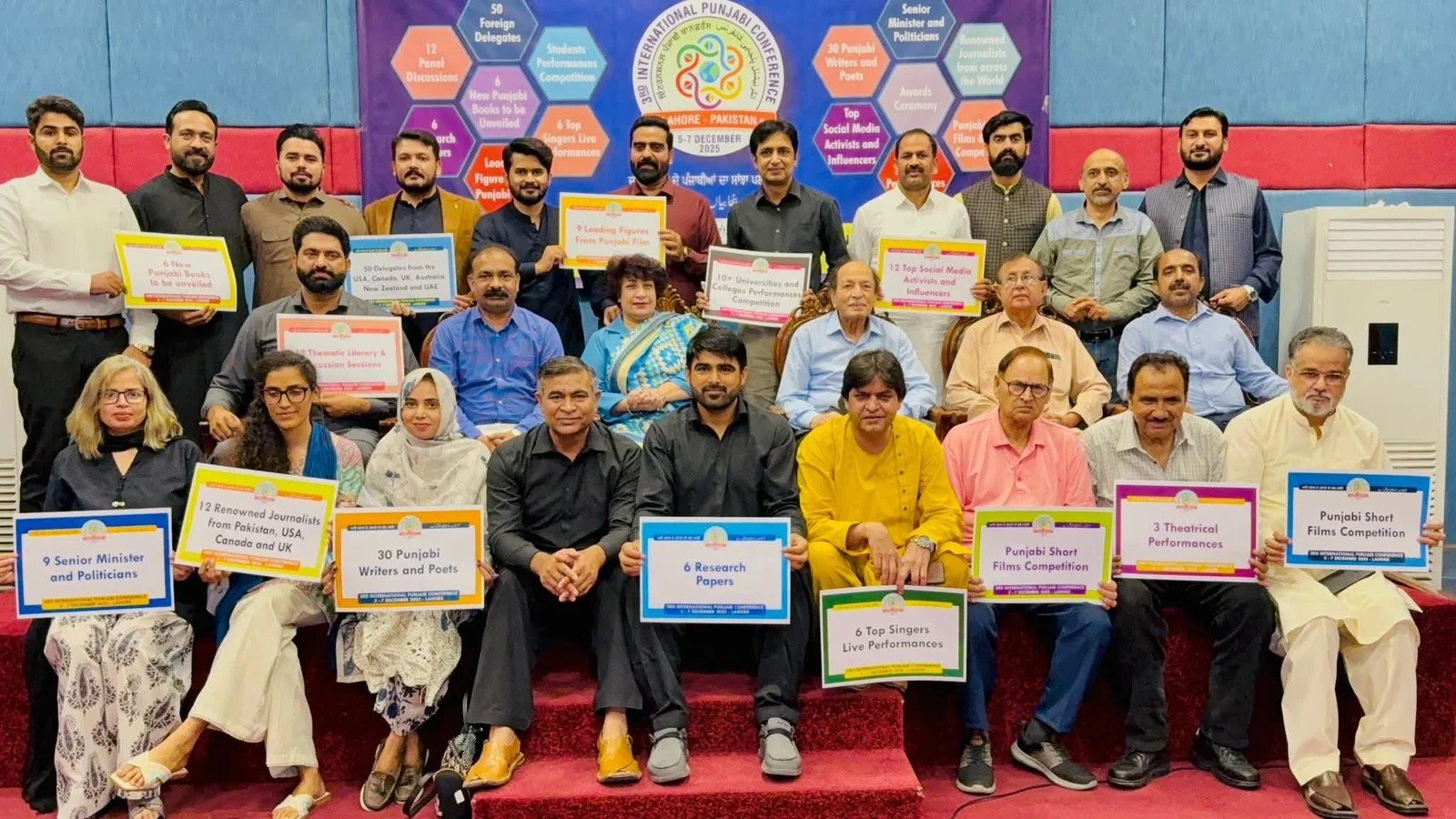
The third edition, held from 5 to 7 December 2025, gave the series its clearest theme:
آؤ پنجاب تے پنجابی دی گل کریے (Let’s talk about Punjab and Punjabi)That edition ran panels on the political and economic role of Punjabi women, the floods in Punjab and the policy response they demand, modern world literature and Punjabi literature, and a youth panel on the pathways open to a new generation. It closed with awards, a performance by Arif Lohar and a final Mushaira. The 2026 programme keeps that architecture and adds to it: more sessions, more international guests, and a technology track that did not exist in the same form three years ago.
Track by track: where the debate will happen
The organisers divide the programme into eight tracks. The plenary and culture tracks dominate the timetable because ceremonies, concerts and Mushairas need the biggest halls and the latest slots. The smaller tracks are where the conference does its thinking, and they deserve the closest reading.
Language and education
Two sessions carry the track, and both ask a version of the same question. The first, on the importance of mother language in the education system, is moderated by Dr. Shabnam Ishaq with Rana Sikandar Hayat and Jaswant Singh Gill among the panelists. The second hands the question to vice chancellors of Punjab’s universities: what does higher education owe the mother tongue? Put together, they shift the argument away from sentiment and toward institutions. A language survives in classrooms, examination halls and degree programmes, not only in poetry readings. The panels are unlikely to produce a policy decision on the day, but they put the people who could make one in the same room as the people who have been arguing for it.
Politics and society
Three sessions, each with a different centre of gravity. The first examines the politics of Punjab through language, identity and power, with Khawaja Saad Rafique and Malik Muhammad Ahmad Khan on the panel — a conversation that has to reckon with the fact that Punjabi is the majority language of the province and still struggles for official space. The second looks at the competing political narratives that shape Punjab today, with Najam Sethi and Parvaiz Rashid among the speakers. The third is the most unusual: a cross-border conversation titled “Peace! What Needs to Be Done”, with Liaqat Ali and Farrukh Sohail Goindi on the panel. Bringing Indian and Pakistani Punjabi voices into one discussion about peace is a statement in itself, and the conference has made room for it on the main day rather than in a side hall.
Literature and memory
Eight sessions make literature the third-largest track, and they are built around inheritance as much as new writing. Manzoor Ch speaks on the philosophy of Bulleh Shah; a panel brings together the Sufi and Guru traditions through Kalyan Singh Kalyan, Masood Khalid and Iqbal Qaiser. The book ceremonies are unusually substantial for a conference of this size: Philosophy of Baba Fareed by Dr. S. P. Singh Oberoi, Punjabi Success Stories by Ashok Bhaura and Amriki Truck Nama by Gurindarjeet Singh Neeta on the first day; Sheikh Fareed di Bhaal by Zubair Ahmad, a poetry collection by Tajammul Kaleem and Birkh Bootay by Dr. Gureet Singh Brar on the second; AAP BEETI by Mahinder Singh Randhawa and Punjab di Vel by Aamir Riaz Tutu in discussion across the weekend. Add the youth and senior Mushairas and the track reads as an argument that a language’s canon is not a museum: it is reprinted, argued over and added to every year.
Culture and performance
Culture is the biggest performing track, with 23 sessions, and it is where the conference reaches beyond its registered audience. Arif Lohar closes day one, Sain Zahoor sings on day two, Abrar-ul-Haq closes the conference on day three. Between them sit Ajoka Theatre’s production on Bulleh Shah and Banda Singh Bahadur, a review of the film 40 Din, a drama by the PYA group, Jhummar from Muhammadi College Chiniot, folk singing by the Abdul Ghaffar Raagi Jatha, dances and performances by Punjab Group of Colleges, the Sohawa group and the Cholistani folk artists, and comedy from Saleem Albela.
It would be a mistake to treat this as the entertainment layer around the serious business. For most families in Lahore, a concert or a Mushaira is the way they meet Punjabi as a public language, and the conference’s open stage is one of the few places where a student group, a college troupe and a national singer share a programme. The short-film competition, whose top three entries are screened at the conference, does the same work for a younger audience: it asks filmmakers to make something in Punjabi and then puts it in front of an audience that came for the music.
Media
The media track is small — a review of 40 Din and a panel on the state of electronic and print media in Punjab, moderated by Nadeem Raza with Hussain Naqi among the panelists. Its size understates its importance. A language’s public status is decided as much by what is broadcast and printed as by what is taught, and Punjabi’s presence in Pakistan’s media has always been uneven: plenty of spoken Punjabi on screen, much less Punjabi commissioned, written and edited. The panel is the conference’s chance to ask why, and to put the question to people who run newsrooms rather than only to people who study them.
Youth and technology
Three sessions, and the most directly contemporary of the programme. “Losing Ground: Punjab’s Youth Between Identity and Economy” frames migration as a language question, not only a jobs question: when young people leave, they leave behind the everyday contexts in which Punjabi is spoken. A session on Punjabi youth and artificial intelligence asks what the new tools change for a language with limited digital training data and two written traditions. A third session on youth in the age of modern technology broadens the discussion to platforms, work and attention. The track is evidence that the conference is not only interested in preserving the past; it is trying to describe the conditions under which Punjabi will be used in ten years’ time.
Academics
Two research sessions, both on the first two days: climate change by Dr. Gureet Singh Brar and the Punjabi experience in America by Dr. Jasbir Singh Kang; then work by Sajida Wandal and Ilyas Chatha of LUMS. Research papers give the conference something a panel discussion cannot: evidence. The topics also show how the organisers understand Punjabi studies — not as a narrow philological exercise but as a field that includes environmental change, migration and the lived experience of diaspora communities.
Plenary
Twenty-six sessions, which is more than a third of the programme, and easy to dismiss as ceremony. That would be wrong. The plenary is where the conference states its priorities. This year the keynote slots go to Sohail Warraich on the state of the Punjabi language, Diljeet Brar from Manitoba, and Mustansar Hussain Tarar on the final day. The inaugurations are led by the Chief Minister of Punjab, the Minister of Information and Broadcasting, and a writer who has been a public intellectual in Pakistan for decades. The award ceremonies and guest appearances are the moments the conference becomes visible to audiences who will never sit through a panel. Ceremony is how an event signals what it thinks matters.
The questions the programme is really asking
Read across the tracks, five questions recur.
- Is Punjabi taught or used? The education panels ask about instruction, but the deeper question is whether Punjabi appears anywhere in a student’s life beyond a compulsory subject.
- Who speaks for the language? Political parties, universities, media houses, diaspora organisations and cultural groups all claim a role; the programme puts them on the same stage without resolving the rivalry.
- Can culture carry an economic argument? The youth track links migration to identity, and the culture track shows what a Punjabi creative economy already looks like in music, theatre and film.
- What does a digital Punjabi look like? The technology sessions are the first serious attempt in this series to ask what keyboards, platforms and artificial intelligence mean for a language written in Shahmukhi.
- What is the diaspora for? International delegates are not an audience here; they are speakers, moderators and organisers, and their presence changes what the conference can discuss.
Reading the programme critically
A published programme is a plan, not a record. The session counts and speaker list in this article are the organisers’ own figures, published on the conference website and consulted on 15 November 2026. Times can shift, speakers can withdraw, and parallel sessions mean no single visitor can see everything. Anyone travelling for a particular session should confirm it on the day rather than assume the printed time will hold.
It is also worth being clear about what the conference is not. It does not legislate language policy, fund schools or publish research. It is a platform: three days in which the people who do those things are asked, in public, what they intend to do. Judged as a platform, the fourth edition is ambitious. Judged as a decision-making body, it has no power at all — and the programme is more honest for not pretending otherwise.
Why Lahore, why now
Lahore is where Punjabi’s modern literary culture was made, and PILAC is one of the few public institutions in Pakistan built specifically to host it. Holding the conference there is not neutral: it places the language inside a state cultural institution while keeping the programme independent, and it makes attendance possible for students who could not travel to another city. Free entry matters for the same reason. A conference that charged for access would select its audience; this one, in principle, does not.
The timing matters too. Punjabi’s position in Pakistan is being renegotiated in classrooms, on television and in diaspora communities at the same moment, and the conference is one of the few places where those conversations are forced into the same three days. Whether that produces anything beyond good sessions is not something an article can promise. But a programme with this range — a Sufi singer and a vice chancellor, a short-film competition and a panel on artificial intelligence, a cross-border peace conversation and a senior poets’ session — is at least asking the right questions in the same room.
How to follow the conference
The official conference website carries the full schedule, the speaker list, the venue and travel guidance, and free registration. Punjabi Parchar’s events page documents the 2023, 2024 and 2025 editions and links to the 2026 conference page. For readers planning to attend, the companion visitor guide on this site covers registration, passes, travel and the day-by-day shape of the programme.
Sources
Compiled on 15 November 2026 from the conference’s own published pages — home, about, schedule, activities, guests, venue and travel, FAQ and registration — and from Punjabi Parchar’s archive of the first three editions. Quotations of the 2025 theme and the 2024 motto are reproduced as published. Session counts, timings and speaker names are the organisers’ figures and are subject to change.